



5 Business Ideas You Can Start from Your Kitchen (2025)
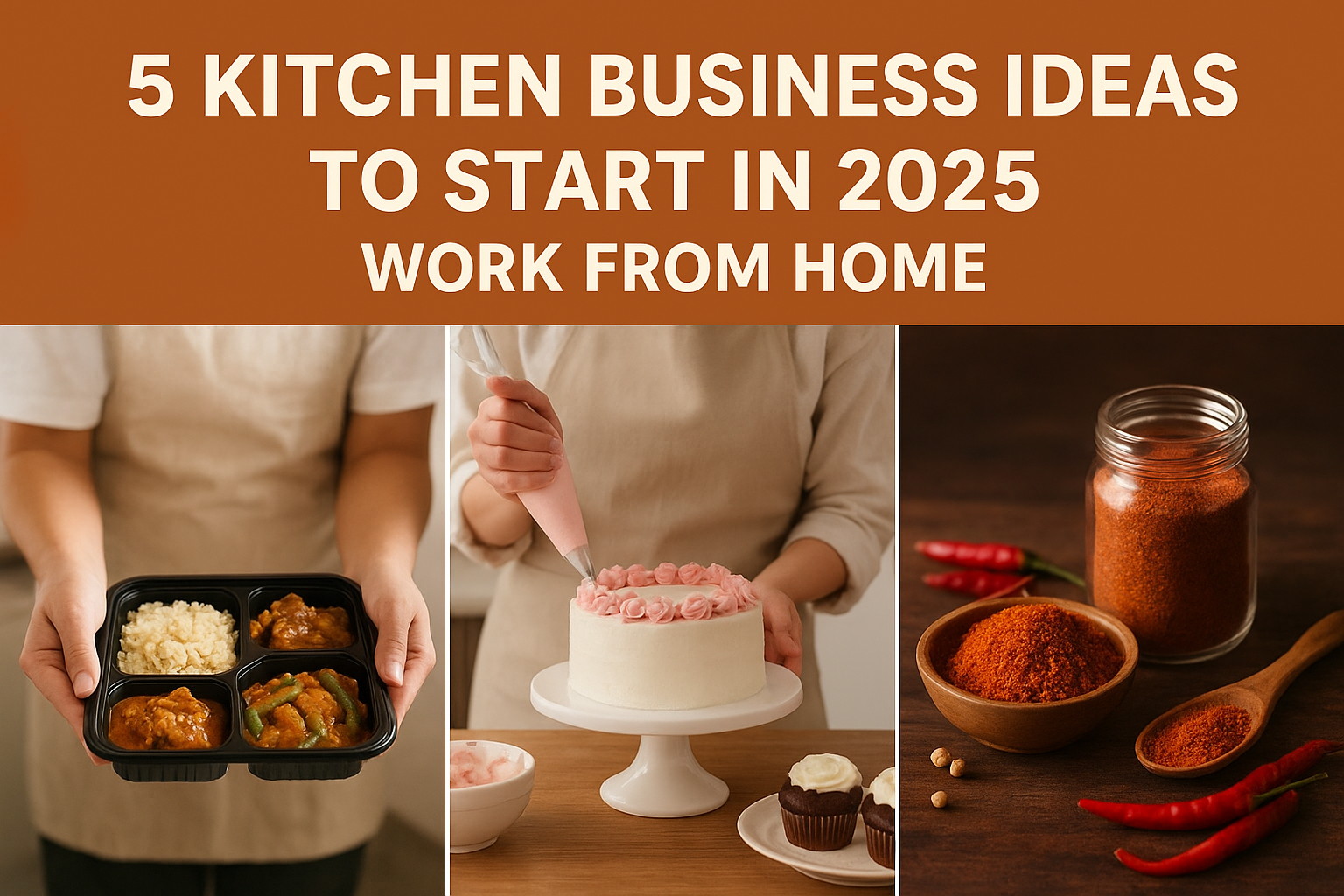
5 Business Ideas You Can Start from Your Kitchen (2025)
5 Profitable Kitchen Business Ideas You Can Start from Home (2025)
meta description: Discover 5 profitable business ideas you can start from your kitchen in 2025. From homemade tiffin delivery to organic spice-making, learn step-by-step setup, investment estimates, and marketing tips.
Introduction
Starting a business from your kitchen is one of the easiest and most cost-effective ways to become an entrepreneur. In 2025, with improved delivery options, affordable digital marketing, and a growing preference for homemade, healthy food, kitchen-based businesses offer huge potential. This article explores five practical and low-investment business ideas you can launch from your kitchen — complete with startup steps, equipment lists, pricing, and marketing strategies.
Why Start a Kitchen-Based Business in 2025?
- Low startup cost: Most ideas need only basic kitchen tools and packaging.
- Rising demand for homemade products: Consumers prefer preservative-free and healthy meals.
- Easy marketing access: Social media, WhatsApp, and local delivery apps make reaching customers simple.
- Scalable growth: Start small and grow into a cloud kitchen or retail setup.
1. Homemade Tiffin & Meal Delivery Service
Overview
Homemade tiffin delivery for offices and students remains a consistent income source. With a regular base of customers, you can build predictable monthly revenue and long-term loyalty.
What You Need
- Stove, utensils, and food containers
- Leak-proof, food-grade packaging
- Refrigerator (optional for advance prep)
- Smartphone + WhatsApp or Google Form for orders
- Simple bookkeeping sheet
How to Start
- Research demand in your locality (offices, hostels, housing complexes).
- Design a simple weekly rotating menu.
- Start with trial orders for 10–20 customers.
- Create order channels via WhatsApp or Instagram.
- Arrange local delivery or pickup options.
- Collect and act on customer feedback.
Investment & Earnings
Investment: ₹3,000–₹10,000 (packaging + ingredients + basic promotion).
Revenue: ₹20,000–₹60,000/month depending on orders.
Example: 30 daily tiffins × ₹120 = ₹3,600/day → ₹96,000/month before expenses.
Scale-Up Tips
- Offer subscription plans and meal combos.
- Partner with offices for bulk lunch deliveries.
- Expand into nearby housing complexes or colleges.
2. Home Baking Business (Cakes, Cookies & Confectionery)
Overview
Home baking is one of the most profitable small food businesses in India. Custom cakes, cookies, and desserts are in high demand for birthdays, weddings, and festive occasions.
Requirements
- Oven, hand mixer, trays, icing tools
- Food-safe packaging & cake boxes
- Good lighting for photography and videos
- Basic hygiene certification
Startup Steps
- Perfect 3–4 signature items (cakes/cookies).
- Create an Instagram page with attractive photos.
- Take early orders from family and friends for reviews.
- Join Facebook/WhatsApp local seller groups.
Investment & Profit
Startup Cost: ₹5,000–₹25,000
Monthly Income: ₹25,000–₹1,00,000+ (custom cakes can earn ₹1,000–₹5,000 each)
Marketing Tips
- Promote “festival boxes” or limited-edition treats.
- Collaborate with local cafes for supply deals.
- Use Instagram Reels and location-based hashtags.
3. Homemade Spices, Masalas & Pickles Business
Overview
Homemade spice mixes and pickles never go out of trend. You can sell locally and later expand online via marketplaces like Amazon or Meesho.
What You Need
- Quality raw spices, jars, and airtight packaging
- Label design and branding
- Knowledge of FSSAI labeling requirements
How to Start
- Choose 2–3 popular items (masala mix, pickle).
- Test locally with free samples or tasting booths.
- Sell via WhatsApp, Instagram, or small stores.
- Apply for FSSAI basic registration if scaling.
Investment & Returns
Cost: ₹3,000–₹10,000
Revenue: ₹15,000–₹60,000/month depending on reach.
Packing & Branding
Attractive labels, transparent jars, and eco-friendly packaging build trust and justify premium pricing.
4. Cooking YouTube Channel & Online Classes
Overview
If you love teaching, turn your skills into content. You can earn via YouTube ads, brand deals, affiliate links, and paid cooking classes.
Tools You Need
- Smartphone, tripod, ring light
- Video editing app (like CapCut or VN)
- Recipe planner and posting consistency
Steps to Start
- Post 2 videos a week (1 short + 1 detailed).
- Use SEO-friendly titles like “10-Minute Meals.”
- Engage with viewers via comments and polls.
- Offer paid recipe PDFs or online workshops.
Monetization Ideas
- YouTube Partner Program (ads)
- Brand sponsorships
- Affiliate marketing (cookware, ingredients)
- Online cooking classes
5. Homemade Snacks, Juices & Healthy Foods
Overview
Healthy snacks like granola bars, roasted nuts, and cold-pressed juices are popular in urban markets. Great for small-scale production and regular subscription sales.
Requirements
- Blender, jars, bottles, sealing tools
- Labels & refrigeration (for drinks)
Startup Steps
- Develop recipes and test with friends.
- Define shelf-life and add expiry labels.
- Offer combo boxes or subscription packages.
Profit Example
If cost = ₹40/jar and price = ₹80, selling 100 jars → ₹8,000 revenue, ₹4,000 gross profit.
Corporate and repeat customers boost growth quickly.
Legal & Food Safety Requirements
- FSSAI Basic Registration: Affordable and adds credibility.
- Municipal Permissions: Check local rules for home kitchens.
- Labeling: Include ingredients, net weight, and contact details.
- Hygiene: Maintain cleanliness, wear gloves/masks, and train helpers.
Marketing & Sales Strategies
- WhatsApp Business: Showcase menu and offers via status updates.
- Instagram Reels: Short cooking clips attract local customers.
- Local delivery apps: Partner with neighborhood platforms.
- Referral discounts: Reward customers for new referrals.
- Partnerships: Collaborate with gyms, cafes, and offices.
Packaging, Pricing & Margins
Proper packaging increases trust and allows for higher pricing.
Pricing formula: Ingredient + packaging + labor + overhead × 2 = selling price.
Example: ₹30 (ingredients) + ₹10 (packaging) + ₹10 (overhead) = ₹50 cost → ₹100 selling price.
How to Scale Your Kitchen Business
- Rent a shared or commercial kitchen for bigger orders.
- Hire part-time help for efficiency.
- Join food delivery aggregators like Swiggy/Zomato.
- Supply to local retail and health food stores.
Frequently Asked Questions (FAQs)
Do I need an FSSAI license to sell from home?
Yes, a basic FSSAI registration is recommended. It’s inexpensive and builds customer trust.
How should I price my food products?
Calculate cost per unit and apply a 1.8–2.5 markup depending on quality and niche.
Can I start with zero investment?
Yes — use your existing tools and promote on WhatsApp or social media to start free.
When can I expect profit?
Most small kitchen startups recover costs within 1–3 months if you get consistent orders.
Conclusion
Kitchen-based businesses are low-risk, flexible, and full of potential in 2025. With a small investment, quality products, and smart marketing, you can turn your passion for cooking into a sustainable income source. Start small, maintain hygiene, follow regulations, and scale gradually — success will follow!